


Few shrubs deliver the combination of color, fragrance, and visual impact that common lilac brings to the spring landscape. Dense panicles of richly colored flowers rise above clean, blue-green foliage, filling the air with a fragrance clients immediately recognize and remember. From cool blues and lavenders to deep purples and bi-colors, Syringa vulgaris offers a palette that reads from a distance and holds up on close inspection—making it a true showpiece in any spring planting.
Family: Oleaceace
Type: Deciduous Shrub
Zone: 3 to 7
Height: 8-15 ft
Spread: 6-12 ft
Leaf Structure: Opposite, Simple, Ovate to Heart-shaped Leaves with Smooth Margins that are 2-5” Long
Leaf Color: Dark Grey-Green to Blue-Green
Bark: Grey to Grey-Brown
Flower Structure: Large, Upright Conical Panicles (6–8") of Fragrant, Tubular, 4-Lobed Florets; Available in Single and Double Forms
Flower Color: Cultivar Dependent - Lavender, Purple, Deep Burgundy, Magenta, Blue, White, Bi-Color, Etc.
Seeds: Brown Seed Capsules ¾” Long which extend into Winter if Not Removed
Bloom: May
Light: Full Sun; Tolerates Light Shade
Soil: Best in Moist, Fertile, Well-Drained Soils; Adaptable to Clay and a Range of Soil pH.
Water: Medium
Maintenance: Medium
History
Native to the open woodlands and rocky hillsides of southeastern Europe, Syringa vulgaris has been cultivated since the late 1500s and introduced to North America in the early 1600s. Over centuries of use, it has proven itself as a long-lived, reliable shrub in both private and public landscapes.
The name, Syringa, is derived from the ancient Greek word syrinx, meaning pipe or tube. The stems of the common lilac have a spongy pith that when removed, leave hollow tubes that were used to make panpipes.
Documented plantings by Thomas Jefferson and George Washington underscore its role in early American gardens, and some of the oldest living lilacs in North America—planted in the mid-1700s—are still thriving today. This level of longevity is rare in the shrub world and makes common lilac a trusted choice for designers who value permanence.
Utility
Common lilacs are exceptionally versatile. Its multi-stemmed habit and upright form allow it to function as a hedge, informal screen, specimen plant, or mass planting. It performs equally well in cottage gardens, naturalized settings, and along woodland edges, and it excels in transitional spaces where softer structure is desired.
Whether used as a focal point or as part of a larger planting composition, lilac provides dependable spring structure and seasonal drama with minimal compromise. Syringa vulgaris does well in northern climates because they need a cold induced dormancy period to encourage flowering the following spring.
Maintenance
Maintenance requirements are moderate and predictable, making Syringa vulgaris an easy plant to manage long-term. Proper spacing and good air circulation are key to overall health.
Pruning should be done immediately after flowering, as blooms are produced on old wood. Pruning later in the season will reduce or eliminate the following year’s flowers. Root suckers should be removed promptly to maintain form, and spent seed capsules can be pruned out for a cleaner appearance. Once established, lilacs require little intervention beyond basic care.
Common Issues
Powdery mildew is the most common issue associated with lilacs, particularly in humid conditions. However, it is largely cosmetic and rarely causes long-term damage. Proper spacing, airflow, and full sun significantly reduce its occurrence.
Common lilac also tolerates deer and rabbit pressure better than many flowering shrubs, making it a dependable choice in areas with browsing concerns.
Why Choose Lilacs?
When you specify Syringa vulgaris, you are selecting a plant with proven performance, unmatched spring fragrance, and lasting visual appeal. It is a shrub clients recognize, respond to emotionally, and appreciate year after year.
For landscapers, architects, and contractors, common lilacs offer reliability in installation, longevity in design, and a strong return on visual impact. Simply put, it remains one of the most effective ways to make a spring landscape unforgettable.
Selecting the Right One
With a wide range of proven cultivars growing in our fields, selecting the right lilac comes down to matching color, bloom form, and timing to your design intent. Below are the varieties we currently have available.
Syringa vulgaris ‘Wedgwood Blue’
Soft porcelain-blue flowers with an elegant appearance; ideal for upscale and formal landscapes.
Syringa vulgaris ‘President Lincoln’
Sky-blue flowers; dependable, classic, and widely adaptable.
Syringa vulgaris ‘President Grevy’
Large, double blue flowers and vigorous growth; ideal for high-visibility locations.
Syringa vulgaris ‘Nadezhda’
Cool blue-lavender flowers and upright habit; well suited to formal and contemporary designs.
Syringa vulgaris ‘Albert F. Holden’
Soft lavender-blue flowers with excellent cold hardiness; reliable and upright, ideal for residential and municipal use.
Syringa vulgaris ‘Monge’
Vivid violet-purple flowers in dense panicles; bold color and strong spring presence.
Syringa vulgaris ‘Sensation’
Purple flowers edged in crisp white; highly recognizable with strong retail and client appeal.
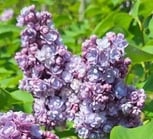
Syringa vulgaris ‘Michael Buchner’
Soft lavender-pink blooms with notable fragrance; valued for refined color and consistent performance.
Syringa vulgaris ‘President Poincaré’
Rich reddish-purple flowers with strong panicle form; suited for bold color statements.
Syringa vulgaris ‘Charles Joly’
Double, deep magenta-purple flowers with strong fragrance; a classic choice for specimen and historic settings.
Syringa vulgaris ‘Paul Thirion’
Rosy magenta blooms with excellent fragrance; effective as a specimen or in grouped plantings.
Syringa vulgaris ‘Ludwig Spaeth’
Late-blooming with dark reddish-purple flowers; extends the lilac season when paired with earlier cultivars.
Syringa vulgaris ‘Burgundy Queen’
Deep wine-colored buds opening to rich purple flowers; adds dramatic color depth to spring landscapes.
From classic blues to deep purples and bi-color forms, our selection of common lilacs allows you to specify with confidence. Choose the cultivar that fits your design intent, and let the plant’s performance do the rest.


